How long is the table?
Each format has a different session length. Points is one deal; Deals is two, three or five; Pool is open-ended with a fixed-score limit.
Home · Games
Rummy formatsThree adult formats sit under the jackpotnow label. Each one follows a different rule shape, a different deal count, and a different scoreboard. This page exists so you can read the difference before you open the configured access path.
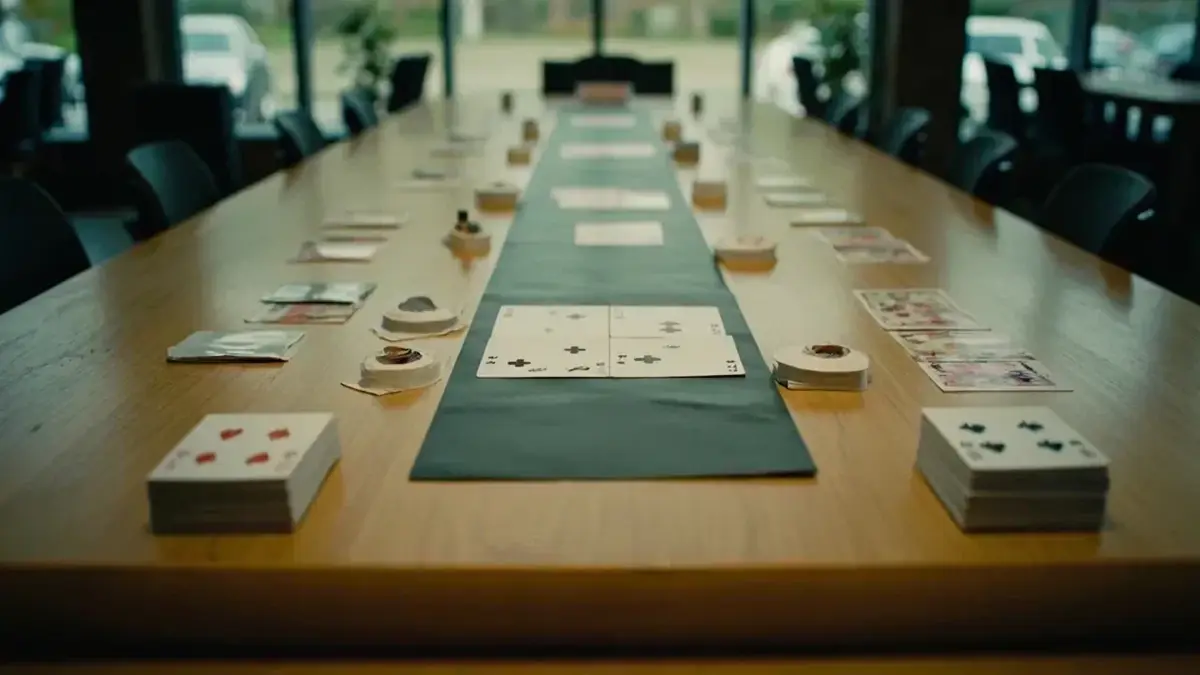
Points rummy is the shortest table on the menu. Every hand resolves in a single round. The score you walk away with is the value of the cards left unmatched in your hand at declaration, with no carry-over and no deal count to track.

The published cost of a drop in points rummy is what an adult reader should know before a first deal. If the threshold is not visible on the table screen, stop and ask support before you play.


Points rummy rewards one thing: the reader's ability to determine the published drop threshold and decide whether their current hand is above or below it. Deals rummy rewards the second thing: the reader's willingness to keep a running ledger across multiple deals without losing a face card count. Pool rummy rewards the third: the reader's discipline to sit out a single bad hand, knowing the elimination cost.
None of these are market promises. They are mechanics. The scoreboard is the contract; the threshold is the cost. Where the rule shape lets a reader make the same decision in every variant, that decision is the reader's, not the platform's.

If you have read the three formats above and you intend to play, the next read is /how-to-play/ for a first-seat walk. /strategy/ is the right read if you intend to play more than once this month, because it lays out the drop threshold, the deadwood math and the limits of skill.
The next step after the format brief is a first seat. The configured access path remains the same on desktop and mobile. Use it only after you have read /how-to-play/.
Each format has a different session length. Points is one deal; Deals is two, three or five; Pool is open-ended with a fixed-score limit.
Points rummy. The session ends when the deal ends; no running ledger.
From the unmatched cards left in your hand at declaration. The score shape is published in the table rules.
In Points, when the deal resolves. In Deals, when the deal counter hits zero. In Pool, when one player hits the elimination limit.
Points rummy is the shortest table. One deal, one score, one quiet exit. The deal is the entire session.
From the table rules the operator publishes on the help centre. The drop cost is in numbers; treat the published numbers as the rule.
Yes. Points rummy uses a hand-value threshold. Pool rummy uses a fixed-score elimination limit. Deals rummy is a deal-count table.
Points rummy's score is the value of cards left unmatched. Deals rummy's score carries over deals. Pool rummy's score accrues to a fixed limit. The score shape is the rule the rest of the session sits on.
The threshold is the number on the help centre that determines when dropping costs less than staying in. The threshold is the operator's own publication; the desk does not invent an alternative number.
A same-suit consecutive run. The grouping that counts even when the rest of the hand does not. The pure sequence is the contract of the rule shape; without it, the declaration never resolves.
Dropping is a published cost. First-card drop, mid-game drop and full-show drop each carry a different cost. The cost is the operator's own publication; the desk keeps the cost on the operator's page, not on the desk's.
A limit on the session before the lobby opens. The cap is set on the account settings panel. The cap is the rule; the desk recommends the cap is bound before any format choice is made.
A same-suit consecutive run. The grouping that counts without joker substitution.
A declaration without a pure sequence, or with leftover unmatched cards past the threshold. The deal resolves against the declaring player.
Leaving the deal before declaration. The published cost is taken from the table rules.
The face-down draw pile. The card drawn at the start of the turn comes from here unless the discard is picked.
The face-up discard the previous player made. Picking from the discard signals to the table which card is wanted.
A printed-joker or wild joker drawn at the deal's start. The joker substitutes within groups but never in the pure sequence.
Once a reader has read the short form on this page, the next useful read is one of three. The format brief sits at the top of the table on the operator's screen; the format's score shape sits behind the brief. The published drop threshold sits behind the score shape. A reader who plans to play more than once this month should know all three before opening the lobby. /games/ is the entry, /how-to-play/ is the first-seat walk, and /strategy/ is the limits of skill. The three pages together are the desk's reading order; no other order is recommended.
The format brief also answers the question a beginner reader usually raises first: how long does a single table run. The answer is the score shape's contract: Points runs the length of one deal, Deals runs the length of the deal counter, Pool runs the length of the fixed-score limit. The contract is the operator's own publication; the desk treats the contract as the rule. /how-to-play/ is the next step when the reader plans to sit down; /strategy/ is the next step when the reader plans to return.
Where the lobby banner names a different format than the one the reader was expecting, the desk's recommendation is to switch the lobby selection before sitting. The lobby banner is the reader's first rule, not the format brief on this page. The format brief is the contextual read; the lobby banner is the operative read. The two are aligned when the reader picks the right format; the two are unaligned when the reader does not. The desk's habit is to assume the lobby banner is correct and switch the format selection to match before opening the table.
The rule shape comes from the operator's own help-centre article. The desk treats the article as the rule. The desk does not invent a rule on the reader's behalf, and the desk does not paste a numeric that the operator does not publish. Where the operator rotates the rule, the desk rotates its reading. Where the regulator publishes a per-state rule, the regulator's publication is the rule; the desk treats the regulator's record as the audit trail.
The rule shape and the operator's help-centre article are aligned by design. The shape is the model; the article is the rule. The two can drift; the desk keeps this page aligned with the article, not with the shape. Where the shape suggests a number the article does not publish, the desk treats the shape as suggestive and the article as the rule.
The lobby banner names the format; the table ID on the banner is the audit trail. Where the table ID changes between sessions, the reader's screenshot is the audit trail. The desk recommends a screenshot of the lobby banner on the date of any first read; the screenshot is the audit trail if a later dispute arises about which format the session ran on.
The lobby banner also names the deal count for Deals rummy and the fixed-score limit for Pool rummy. The published numbers are the reader's first rule; the format brief is the contextual read. The two are aligned when the reader picks the right format and the right deal count; the two are unaligned when the reader does not. The desk's habit is to assume the deal count is correct and the format is correct; the reader's audit trail is the screenshot.
For Points rummy, the lobby banner names the format's score shape and the deal count. The score shape is the rule; the deal count is the rule. The format brief is the contextual read. The two are aligned when the reader picks the right format; the two are unaligned when the reader does not.
For Pool rummy, the lobby banner names the fixed-score limit. The fixed-score limit is the rule; the format brief is the contextual read. The two are aligned when the reader picks the right format; the two are unaligned when the reader does not. The desk's habit is to assume the fixed-score limit is correct and the format is correct; the reader's audit trail is the screenshot.